Where is pressure being created?
What workload, planning, staffing, change, welfare, control, role or commercial conditions are linked to strain?
Diagnostic front door
Discovery looks for the route problem, not just the support list.
It shows where pressure is being created, where concern is getting stuck, where support is unclear or inaccessible, and what should happen next.
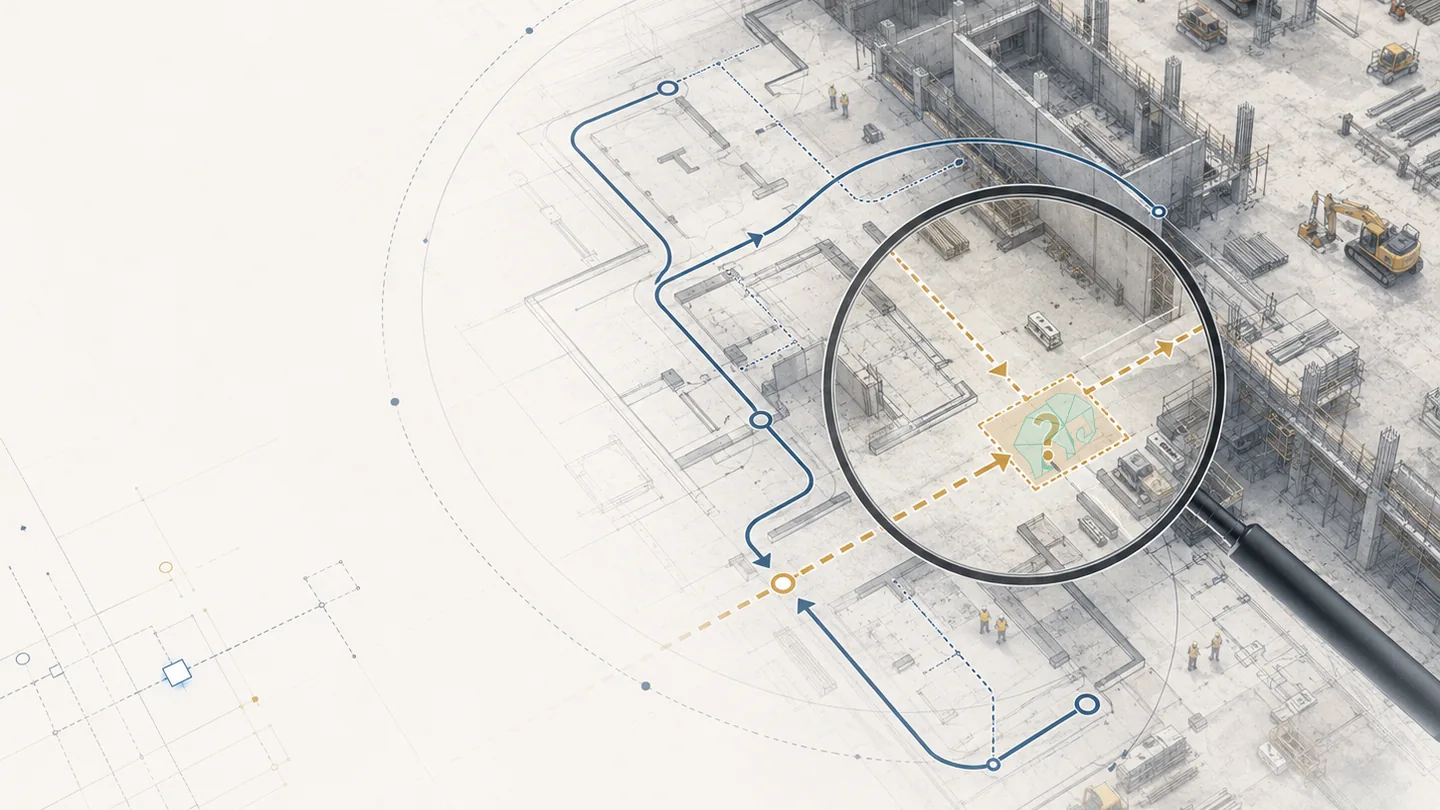
What Discovery examines
Discovery looks at practical route capability and upstream work factors together, so the recommendation is not limited to signposting, awareness or route design in isolation.
Diagnostic questions
Discovery tests how pressure, responsibility, support and follow-up actually work across projects, sites, functions and supply-chain interfaces.
What workload, planning, staffing, change, welfare, control, role or commercial conditions are linked to strain?
When concern becomes visible, who is expected to act, what are they expected to do, and what support do they have?
Does concern stall because thresholds, records, handoffs, confidentiality limits or ownership are unclear?
Can direct employees, subcontractors, agency workers, remote workers and self-employed workers realistically use the route?
Are supervisors, managers or informal helpers holding concern beyond their role because formal routes are unclear or slow?
Is there accepted handoff, proportionate follow-up and learning, or does the organisation lose sight of whether the route worked?
Weak-signal intelligence
Before or during Discovery, Glass Elephant may review weak signals such as exit themes, grievance patterns, absence trends, safety near misses, worker comments, public review sites, forums or other publicly visible feedback.
Long hours, poor work-life balance, poor management, last-minute deadlines, low staffing, no one listens, good company but bad project, weak welfare or inconsistent site experience.
Weak signals do not prove organisational truth. They identify themes worth testing through proper discovery.
The work stays proportionate, client-safe and focused on themes rather than naming individuals or turning informal comments into proof.
Weak-signal material is not treated as proof. It is used only as a clue to test through proper discovery.
What organisations gain
Move into route design, role boundary, threshold or bounded response work.
Move into a Pressure Controls Register, Project Pressure Review or Site Welfare & Dignity Review.
Clarify supply-chain, SME, agency or site-level routes so people are not left outside the system.
Define measures and governance so routes, controls and ownership are reviewed over time.
Boundary
Discovery does not diagnose individuals, conduct HR investigations, replace HSE, Occupational Health, EAP, safeguarding, emergency services or legal advice, or treat weak signals as proof. It builds an evidence base for proportionate organisational action.
Confidentiality
Discovery is designed to be useful without becoming a blame exercise. Findings are handled as confidential client material, reported proportionately, and focused on organisational routes, controls and ownership rather than individual blame.
Glass Elephant avoids unnecessary personal, medical or identifiable detail. The aim is to understand how pressure, responsibility, support access and follow-up work across the organisation, not to expose individuals or create a public judgement about the client.
Where appropriate, discovery can operate under agreed confidentiality terms or a non-disclosure agreement.
Next step
Use the conversation to decide whether Discovery & Route Mapping: Pressure System Diagnostic is the right starting point.
Discuss the Half-Day Pilot